How It Works
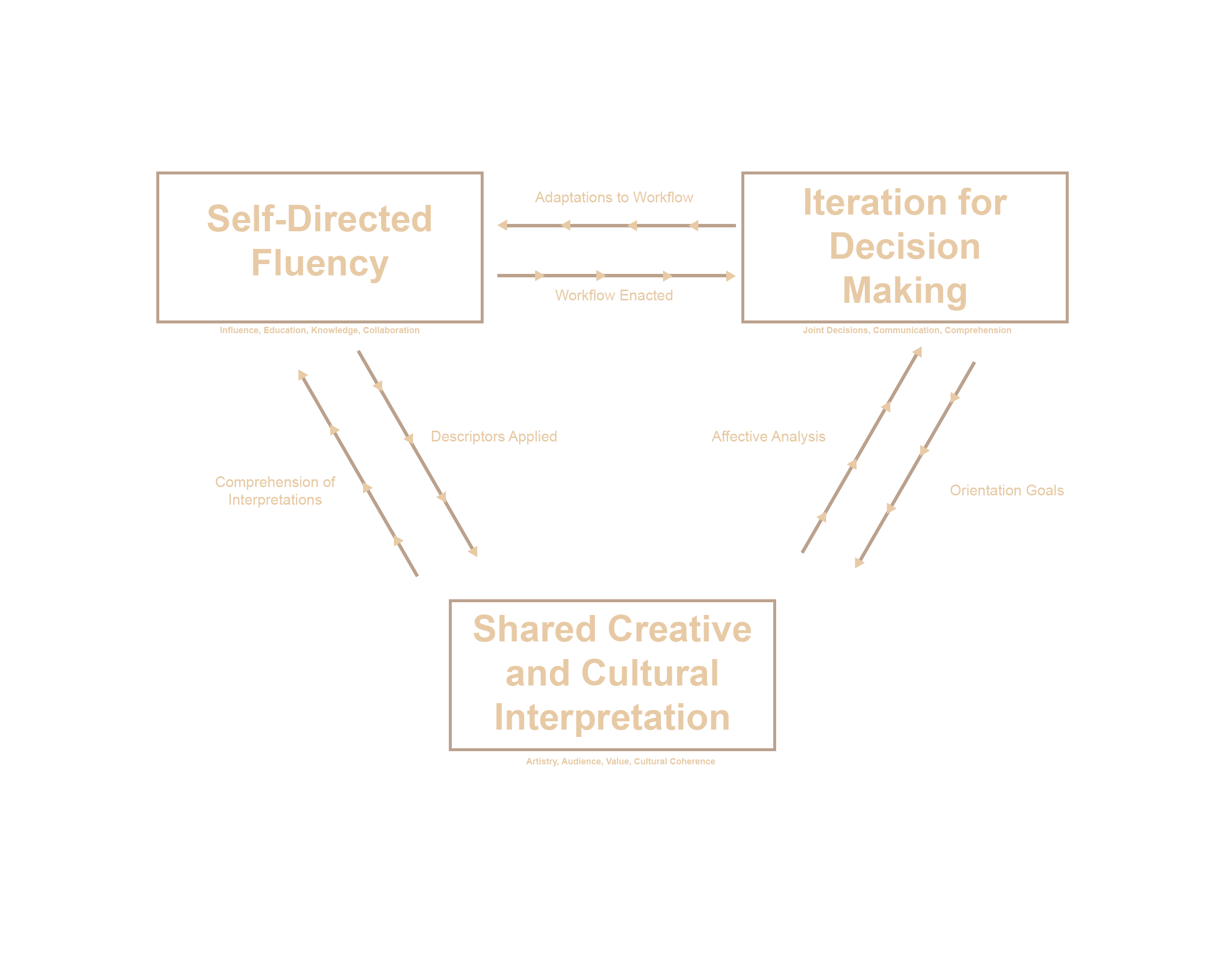
The model operates as a dynamic cyclical process for the pre-production of music-visual assets. It is built around three interconnected components: Self-Directed Fluency, Iteration for Decision-Making, and Shared Creative and Cultural Interpretation.
Self-Directed Fluency encompasses the acquired knowledge, experience, influences and visual literacy that collaborators bring into a project. The build-up of fluency enables workflows to take place and develop through multiple projects, informing Iteration for Decision-Making. Here, artists and creatives exchange references, discuss ideas, evaluate options and make collaborative choices. The iteration of the collaboration also fosters a stronger comprehension of each party within the collaboration and the goals that are set for the resulting outcome. These decisions then move into Shared Creative and Cultural Interpretation, where audience perceptions and cultural coherence are considered alongside artistic and commercial value.
Unlike a linear workflow, the model continuously loops back on itself. Audience responses, new influences, project outcomes and evolving cultural trends all feed back into future collaborations, expanding the knowledge of those involved. The dynamic nature of the model also allows a reversing of the cycle; Iteration improves fluency by adapting the workflow, emotional analysis of interpretation informs the decision making, and the fluent knowledge can apply descriptors to evaluate the interpretation into commonly understood terminologies.
Through this cycle, the model functions as a translation system between music and visual disciplines, helping collaborators develop a shared vocabulary, align creative intentions and make more informed aesthetic decisions while remaining adaptable to cultural change.