Making the Model
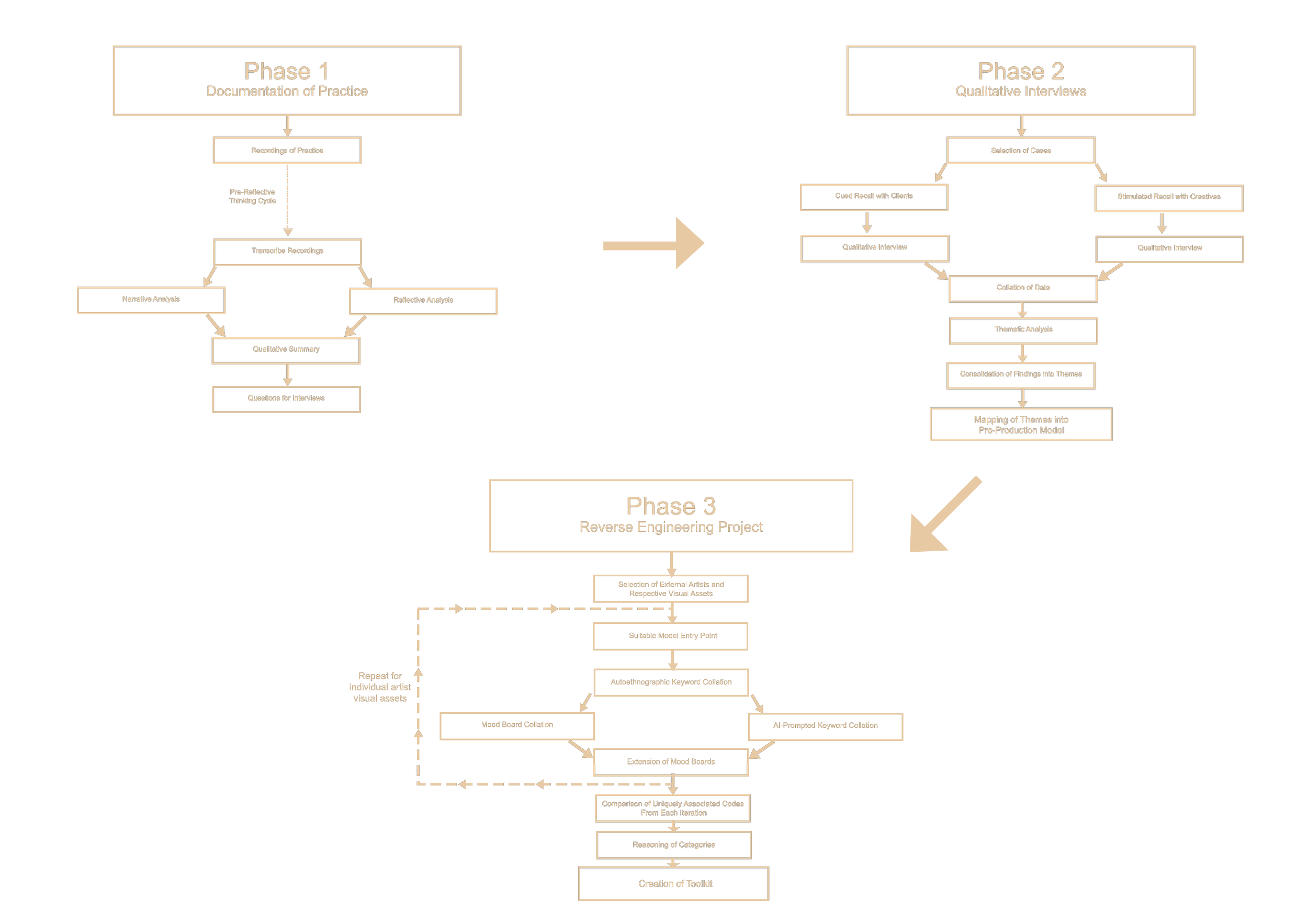
The model was developed through a three-phase research project grounded in social constructionism. First, an autoethnographic study documented the researcher’s own professional workflow while creating music visual assets. The narration of the documentation enabled reflection-in-action, revising the workflow through fresh comprehension, revealing the decision-making processes, terminology and influences used in practice. Second, interviews with music artists and visual creatives explored how different collaborators communicate, interpret visual aesthetics and make creative decisions through iterative collaborations. Finally, the findings from both stages were analysed and synthesised into a framework that mapped the recurring patterns found across projects and collaborations.
The resulting model structure was influenced by existing creativity theories, particularly Csikszentmihalyi’s Systems Model of Creativity, but was adapted to reflect the dynamic realities of cross-disciplinary music-visual production. This was put to the test through a reverse-engineering process, applying it to contemporary music visual assets that had been created through iterative collaboration to assess how visual decisions, influences and aesthetic categories could be traced back through the model and organised into the practical toolkit presented in this site.