Project History
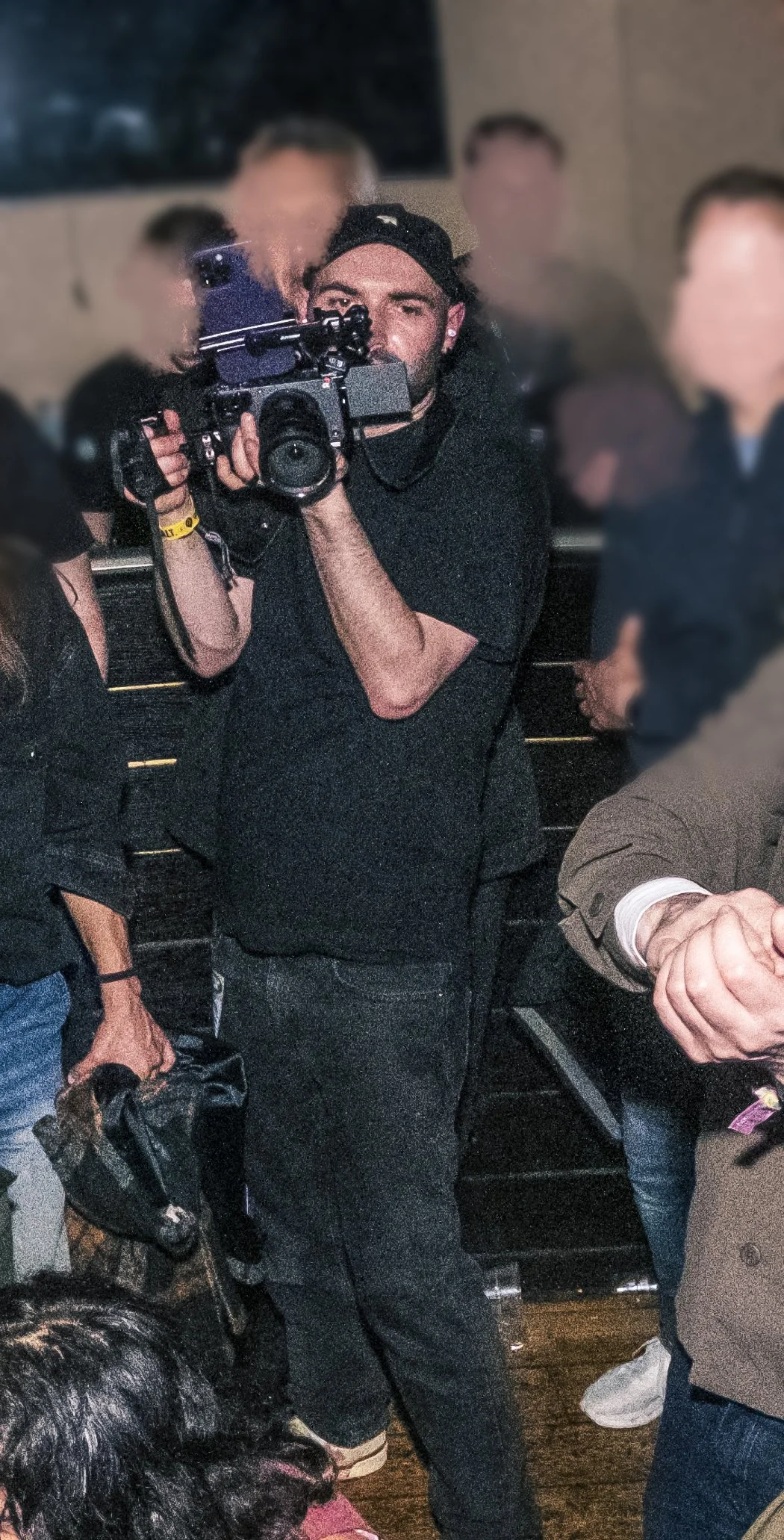
This project emerged from my professional practice working across music, visual media and artist development, where I regularly collaborated with musicians, photographers, videographers, designers, marketers and other creative practitioners. Through these projects, I observed that some of the greatest challenges were not technical or artistic, but communicative. Collaborators often approached the same project with different forms of expertise, different creative priorities and different interpretations of visual language. Terms such as "authentic", "commercial" or "cinematic" frequently carried different meanings depending on an individual's disciplinary background. These experiences led me to explore how cross-disciplinary collaborations function, how creative decisions are negotiated between different specialists, and how a shared understanding can be established throughout the creative process.
At the same time, the increasingly visual nature of the music industry highlighted a wider challenge. The rapid evolution of digital platforms, audience behaviours and online communities has accelerated the development of visual trends and cultural aesthetics, creating an environment in which visual meaning is constantly shifting. As both an educator and practitioner, I recognised a need for a framework that could help explain how visual identities are collaboratively constructed, how different forms of creative partnership contribute to that process, and how these collaborations adapt to ongoing cultural change. The project was therefore developed to bridge professional practice and academic research, creating a model and toolkit that support communication, collaboration and visual understanding across contemporary music and creative industries.
Background
For Industry and Education
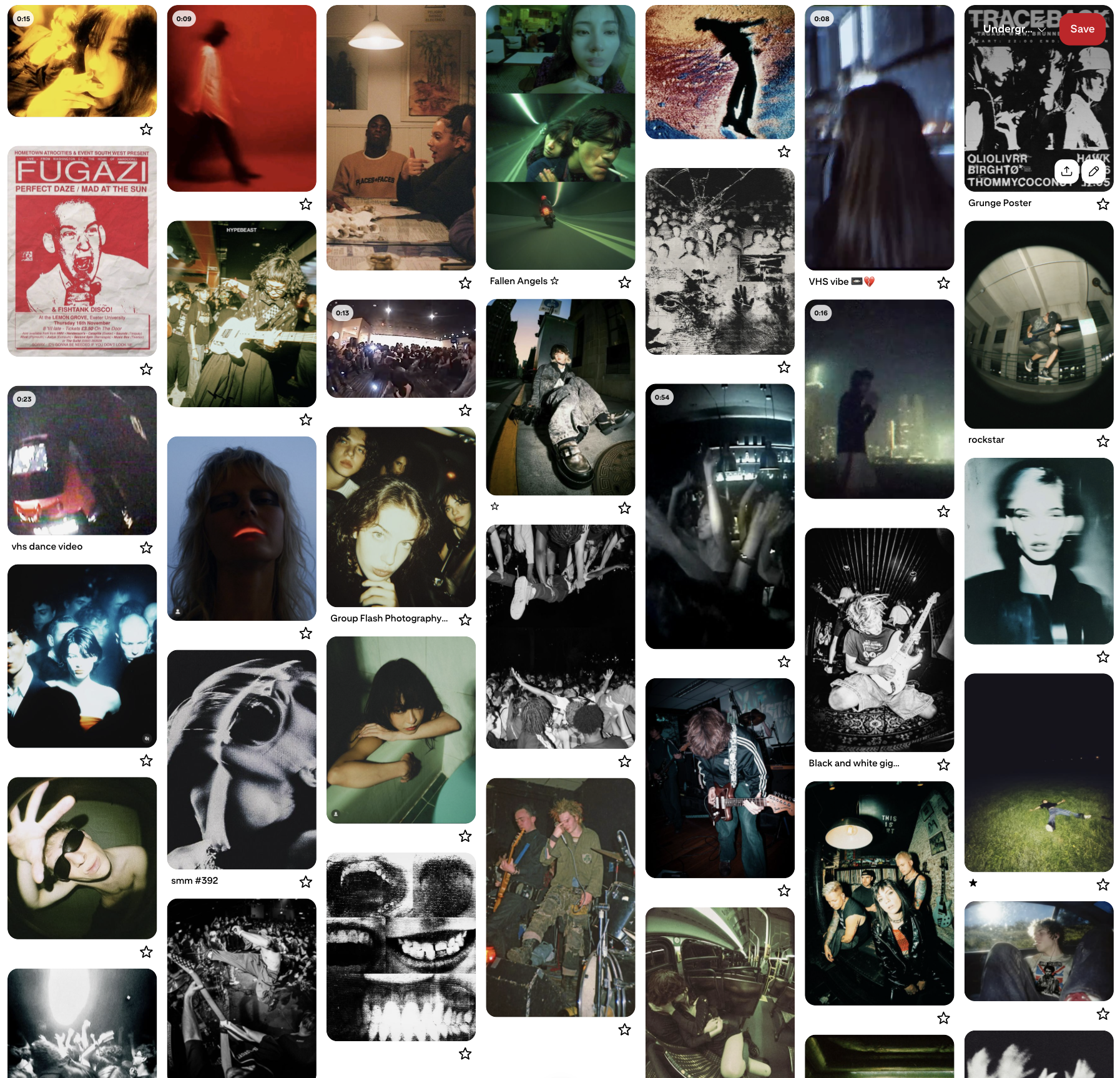
The project was designed to support both professional practice and higher education by creating a shared framework for understanding cross-disciplinary collaboration. Within industry, the model provides a structured approach to aid musicians, visual practitioners and music industry teams communicate more effectively, articulate aesthetic intentions and navigate increasingly complex creative workflows, while the toolkit provides a current comprehension of trending visual styles within rock music, suggesting influential imagery, keywords and terms that demonstrates current successful visual aesthetics.
By making collaborative processes more visible and understandable, the framework also supports continuing professional development, helping practitioners reflect on, refine and adapt their own approaches to creative collaboration within an evolving cultural landscape.
Within higher education, the model offers students a practical introduction to the realities of interdisciplinary creative work. It helps learners understand how different disciplines contribute distinct forms of knowledge, how creative decisions are negotiated between collaborators, and how meaning is co-created across projects involving multiple specialists. By engaging with these concepts before entering professional environments, students can develop stronger communication, visual literacy and collaboration skills, while gaining a deeper understanding of contemporary industry practices. In this way, the framework serves not only as a tool for education, but as a bridge between academic learning and career readiness, enabling students to build industry knowledge through a greater understanding of the collaborative relationships that underpin creative work.

Research and Influence
Initial research in this project focused on the music industry–visual practitioner relationship, the categorisation of style and genre, music branding, and the role of cross-disciplinary visual knowledge within both industry and higher education. These areas revealed recurring tensions between explicit and tacit knowledge, highlighting how musicians and visual practitioners often rely upon differing vocabularies, experiences and interpretations when discussing visual identity. As a result, a review of literature explored wider debates surrounding creativity, collaboration, curation, audience interpretation, social constructionism and cultural production in order to better understand how visual meaning is negotiated and communicated across disciplines.
Particular influence was gained from Csikszentmihalyi’s Systems Model of Creativity, alongside Kerrigan’s adaptation for a systems-based interpretation of creative practice in filmmaking. These frameworks provided a foundation for understanding creativity as a process that emerges through interactions between knowledge, culture and participants rather than through individual activity alone. This informed further investigation into curatorial practice, creative mediation, audience-focused production and interdisciplinary collaboration, which highlighted the importance of shared understanding, collective decision-making and cultural interpretation when developing creative work. The literature also revealed a lack of models specifically designed to explain cross-disciplined creativity, such as how musicians and visual practitioners complete projects through the translation of ideas between their respective disciplines within contemporary music industries.
Building upon these theoretical foundations, the project expanded through autoethnographic reflection on my own professional practice, interviews with musicians and visual creatives, and the analysis of contemporary music-visual collaborations. This research revealed recurring themes surrounding communication, shared interpretation, visual literacy, iterative collaboration and creative decision-making. It further demonstrated that visual identities are continually influenced by evolving technologies, audience behaviours, cultural movements and collaborative relationships. These findings informed the development of both the model and toolkit, synthesising theoretical perspectives with contemporary practice to provide a framework through which cross-disciplinary music-visual collaboration can be understood, communicated and continually adapted to cultural change.