Creating the Toolkit
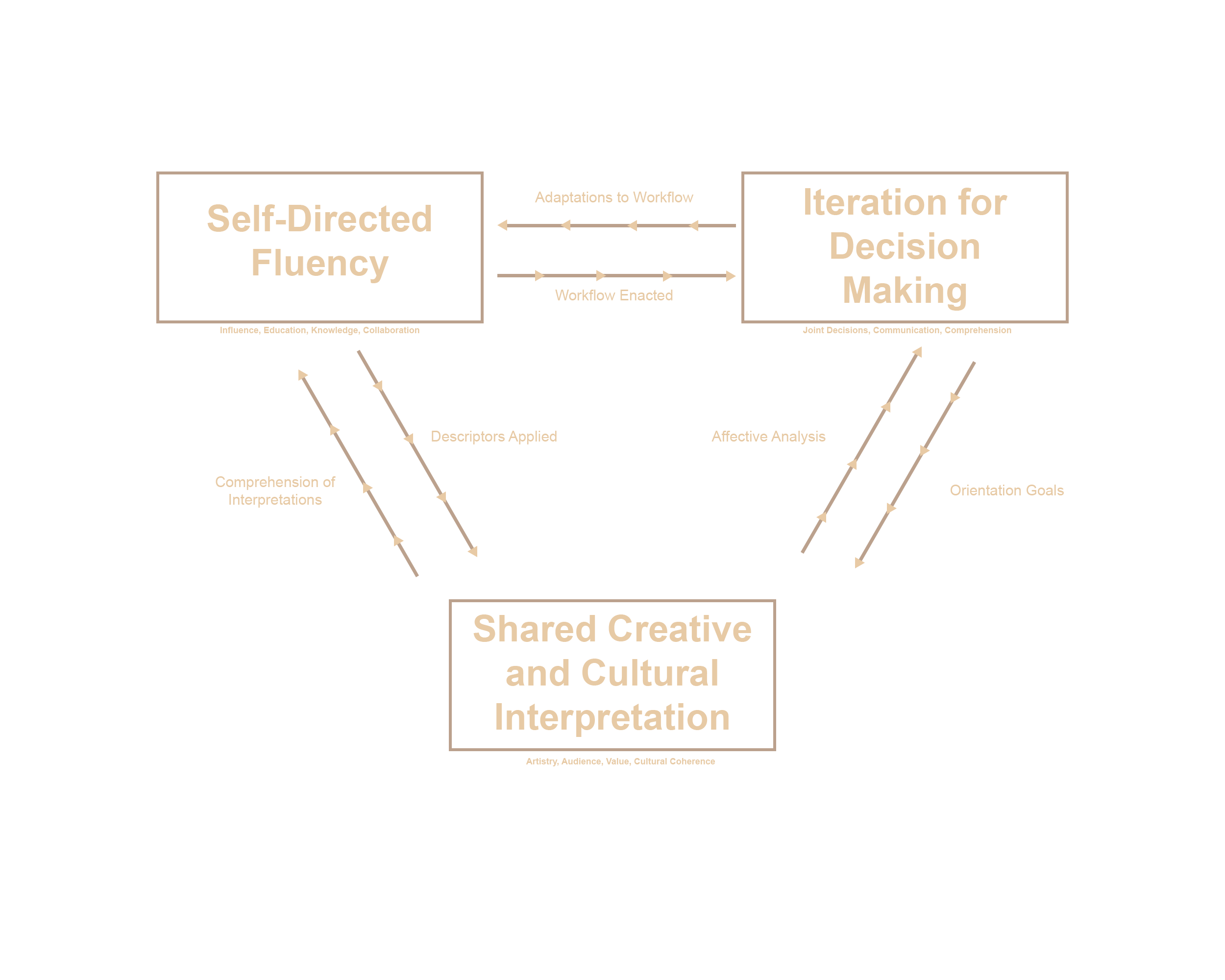
Original pre-production workflows demonstrated the model functioning as a cyclical process running clockwise that began with Self-Directed Fluency. However, the development of the toolkit, testing this through reverse-engineering. As the research examined completed music-visual projects rather than observing collaborations from their starting point, the analysis entered the model through Iteration for Decision-Making, using collaboratively created music-visual assets as evidence. Working backwards from these decisions allowed the influences, references, knowledge and cultural factors that informed them to be identified and organised into aesthetic categories. The resulting toolkit therefore serves as a practical extension of the model, translating its exploration of collaboration, interpretation and cultural meaning into an accessible resource for understanding contemporary music visual culture and style.